Most of the AI conversation right now is about data centers: the chips, power and buildings needed to train and run models. In a short on-stage conversation, Andrew Ng pointed somewhere less obvious. The bigger shift, he said, is in who will use the infrastructure we already depend on: compute, storage and, above all, databases.
Andrew Ng, Founder of DeepLearning.AI: I'm actually very excited about the future of databases. I know, I know you're going to ask me another question. Just to share one thing.
I feel like right now the world is going through a massive data center buildout, with a lot of AI training and inference data centers being built. I suspect something that a lot of the world does not yet appreciate is that in the future, a lot of core infrastructure, be it compute or storage, will be used not just by humans but by agents. And that agentic usage of all this infrastructure will drive massive demand.
So in addition to the AI data center buildout for training and inference, I think a lot of databases have been built for human usage today, and we can only look at and query so much data. But with agentic usage, I think the demand for core infrastructure, for compute, will continue to skyrocket. So I'm actually very bullish on this category as a whole.
What Ng is really saying
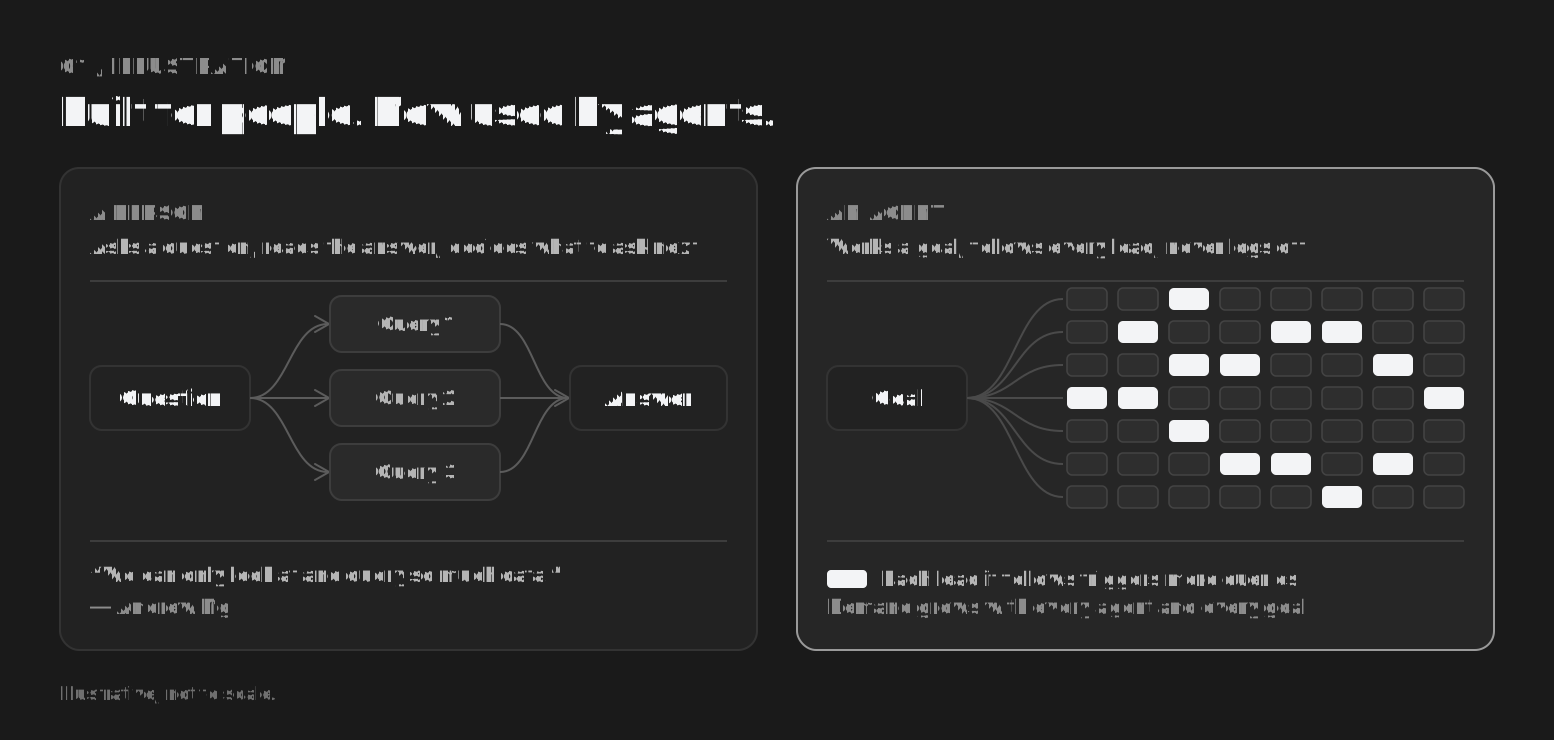
Today's databases were designed around people. A person asks a question, reads the answer and decides what to ask next. That loop has a natural ceiling. As Ng puts it, we can only look at and query so much data.
Agents remove that ceiling. An agent doesn't get tired, doesn't wait for the next meeting and doesn't stop at the first answer. Give it a goal and it will run query after query, around the clock, following every lead it finds. Multiply that by every agent in a company, and demand for compute and storage stops tracking headcount. It starts tracking how much work you hand to agents.
That is why Ng is bullish on the whole category. The data center buildout is the first wave. Agents using core infrastructure is the second, and it has only just started.
View full-size illustration ↗
It's already happening
This isn't a distant forecast. On some platforms, agents already create most new databases.
- Neon: When Databricks agreed to acquire Neon in May 2025, it said internal telemetry showed over 80% of databases provisioned on Neon were created by AI agents rather than humans. Speaking to CNBC at the Data + AI Summit, Databricks CEO Ali Ghodsi said that share was about 30% a year earlier, and suggested it could reach 99% within a year.
- Manus: TiDB reports that at the AI agent platform Manus, agents created more than 90% of new database instances, and roughly 99% of them were used once. Manus created close to 1 million database tenants in three months.
- Enterprise apps: Gartner predicted that 40% of enterprise applications will be integrated with task-specific AI agents by the end of 2026, up from less than 5% in 2025.
Every one of those agents reads and writes data. Each is a new user of your data layer, and few of them were in anyone's capacity plan.
What changes when agents are your biggest data users
- Query volume stops being human-sized. A person might run a handful of queries to answer a question. An agent working the same question can run dozens, and it never logs off.
- Pricing built for people breaks. Tools that charge for every gigabyte ingested or scanned were priced around how people use data. When agents query constantly, the bill grows with every question they ask.
- Old data matters again. Agents ask about last quarter and last year, not just the last few days. History that sits in an archive and needs a restore before anyone can search it slows every agent down.
- Every query is an access event. When software, not a person, is touching your data, you need a clear record of which agent accessed what, when and on whose behalf.
The security side: agents on both sides
Security teams are feeling this first, because agents are now on both sides of the fight. Attackers are already using AI: CrowdStrike's 2026 Global Threat Report found an 89% increase in attacks by AI-enabled adversaries in 2025.
Defenders are answering with AI agents of their own. These agents investigate alerts by searching logs, linking related events and checking every lead, far faster than an analyst can. That is good news for the security team, but it means many more queries per alert, every single day.
We looked at what this does to cost and capacity in The Query Multiplier Crisis. The short version: if your security data can't keep up with your agents, your agents can't keep up with attackers.
Where Rover fits in
Most security data platforms were designed for analysts running a few searches at a time. Rover is built for the world Ng describes, where agents ask thousands of questions across all of your history, at any hour. It treats every one of those questions as normal, not as a cost to be rationed.
Rover keeps all your security data in object storage you own, and every bit of it stays searchable without a restore. Compute runs per query, so cost follows the questions you actually ask. Rover connects users, devices and accounts across sources, so an AI agent can investigate from the first signal to an evidence-backed case. Cold storage, hot intelligence: one platform ready for the agentic era.
Final thoughts
Ng's prediction is easy to agree with and easy to underestimate. You can see a data center being built. The agentic buildout happens quietly inside the systems you already run, one query at a time. Three questions worth asking now:
- How many of the queries against your data today come from agents, and could you tell?
- Could your security data platform handle ten times the queries it runs today, at a cost you'd accept?
- Can an agent search your full history right now, or only the last few weeks?